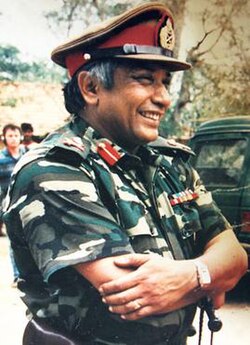
Denzil Kobbekaduwa
Kobbekaduwa believed that armies are built on trust between leaders and led. He led from the front, shared every hardship of his men, lived simply, and insisted that discipline and humanity were inseparable in a professional soldier.
He proved that careful planning, rigorous training and genuine care for troops - not rank or privilege - win battles. His methodical conduct of operations in the north set the professional standard for the modern Sri Lankan Army and made him a role model for generations of officers.
Major General Denzil Kobbekaduwa (27 July 1940 - 8 August 1992) is remembered as one of the finest battlefield commanders in Sri Lankan history. Educated at Trinity College, Kandy, he joined the Ceylon Army as an officer cadet in 1959, trained in the United Kingdom at the Royal Military Academy Sandhurst, and was commissioned into the Ceylon Light Infantry. He later graduated from the United States Army Command and General Staff College at Fort Leavenworth, making him one of the most professionally trained officers of his generation.
In a career spanning three decades he served with distinction during the 1971 JVP insurrection, rose through key command and staff appointments to General Officer Commanding the 2nd Division, and planned Operation Liberation (Vadamarachchi, 1987) - the most successful military offensive against the LTTE up to that time. As Overall Operations Commander of the Northern Theatre from 1990, he revitalized the Army's northern war effort, pioneering small-unit tactics, rigorous training, intelligence-led operations and, above all, genuine care for the ordinary soldier. His masterstroke, Operation Balavegaya (1991), broke the LTTE siege of the Elephant Pass base.
On 8 August 1992, while carrying out a front-line reconnaissance at Araly Point, Kayts, in Jaffna, he was killed alongside Brigadier Vijaya Wimalaratne and other senior officers when the LTTE detonated a massive landmine. His death plunged the nation into mourning. Decorated with gallantry awards including the Rana Wickrama Padakkama and Rana Sura Padakkama, he is honoured annually as the ultimate soldier's general - humble, fearless and beloved by his troops.
1940: Born on 27 July and educated at Trinity College, Kandy, where he excelled in both studies and sport.
1959: Enlisted in the Ceylon Army as an officer cadet and proceeded to the United Kingdom for training at the Royal Military Academy Sandhurst.
1961: Commissioned as a Second Lieutenant into the Ceylon Light Infantry.
1971: Served with distinction in counter-insurgency operations against the Janatha Vimukthi Peramuna (JVP) insurrection.
1970s-1980s: Progressed through senior staff and command appointments, graduated from the US Army Command and General Staff College at Fort Leavenworth, was promoted Brigadier, and appointed General Officer Commanding the 2nd Division.
1987: Planned and commanded Operation Liberation (Vadamarachchi Operation), recapturing terrorist-held territory in the Jaffna peninsula before the offensive was halted under Indian pressure.
1990: Appointed Overall Operations Commander of the Northern Theatre; reorganized deployments, strengthened base defences and led a series of operations to secure supply routes through the Wanni.
1991: Masterminded Operation Balavegaya, which broke the months-long LTTE siege of the Elephant Pass military base - one of the Army's greatest operational successes of the war.
1991-1992: Promoted to the rank of Major General and continued to personally lead reconnaissance and operations across the northern front.
8 August 1992: Killed at Araly Point, Kayts, Jaffna, when his convoy struck an LTTE landmine; Brigadier Vijaya Wimalaratne and several other officers also perished. He was laid to rest with full military honours amid nationwide mourning, and is commemorated annually as a national hero.
A highly professional, apolitical Sri Lankan Armed Forces that could defeat terrorism while protecting civilians, restore lasting peace, and allow every community on the island to live in security and dignity.
To reorganize and revitalize the Army's northern theatre: rebuild operational discipline, develop tactics suited to counter-insurgency, relieve besieged bases such as Elephant Pass, and steadily dismantle terrorist strongholds while safeguarding the welfare of every soldier under his command.
Resume Generator
Contact
Profile Specs
Domain:
Public Service & Gov
Specialty:
Military Leadership
Denzil Kobbekaduwa
Professional Summary
Major General Denzil Kobbekaduwa (27 July 1940 - 8 August 1992) is remembered as one of the finest battlefield commanders in Sri Lankan history. Educated at Trinity College, Kandy, he joined the Ceylon Army as an officer cadet in 1959, trained in the United Kingdom at the Royal Military Academy Sandhurst, and was commissioned into the Ceylon Light Infantry. He later graduated from the United States Army Command and General Staff College at Fort Leavenworth, making him one of the most professionally trained officers of his generation.
In a career spanning three decades he served with distinction during the 1971 JVP insurrection, rose through key command and staff appointments to General Officer Commanding the 2nd Division, and planned Operation Liberation (Vadamarachchi, 1987) - the most successful military offensive against the LTTE up to that time. As Overall Operations Commander of the Northern Theatre from 1990, he revitalized the Army's northern war effort, pioneering small-unit tactics, rigorous training, intelligence-led operations and, above all, genuine care for the ordinary soldier. His masterstroke, Operation Balavegaya (1991), broke the LTTE siege of the Elephant Pass base.
On 8 August 1992, while carrying out a front-line reconnaissance at Araly Point, Kayts, in Jaffna, he was killed alongside Brigadier Vijaya Wimalaratne and other senior officers when the LTTE detonated a massive landmine. His death plunged the nation into mourning. Decorated with gallantry awards including the Rana Wickrama Padakkama and Rana Sura Padakkama, he is honoured annually as the ultimate soldier's general - humble, fearless and beloved by his troops.
Philosophy of Command
Kobbekaduwa believed that armies are built on trust between leaders and led. He led from the front, shared every hardship of his men, lived simply, and insisted that discipline and humanity were inseparable in a professional soldier.
He proved that careful planning, rigorous training and genuine care for troops - not rank or privilege - win battles. His methodical conduct of operations in the north set the professional standard for the modern Sri Lankan Army and made him a role model for generations of officers.
Experience Details
1940: Born on 27 July and educated at Trinity College, Kandy, where he excelled in both studies and sport.
1959: Enlisted in the Ceylon Army as an officer cadet and proceeded to the United Kingdom for training at the Royal Military Academy Sandhurst.
1961: Commissioned as a Second Lieutenant into the Ceylon Light Infantry.
1971: Served with distinction in counter-insurgency operations against the Janatha Vimukthi Peramuna (JVP) insurrection.
1970s-1980s: Progressed through senior staff and command appointments, graduated from the US Army Command and General Staff College at Fort Leavenworth, was promoted Brigadier, and appointed General Officer Commanding the 2nd Division.
1987: Planned and commanded Operation Liberation (Vadamarachchi Operation), recapturing terrorist-held territory in the Jaffna peninsula before the offensive was halted under Indian pressure.
1990: Appointed Overall Operations Commander of the Northern Theatre; reorganized deployments, strengthened base defences and led a series of operations to secure supply routes through the Wanni.
1991: Masterminded Operation Balavegaya, which broke the months-long LTTE siege of the Elephant Pass military base - one of the Army's greatest operational successes of the war.
1991-1992: Promoted to the rank of Major General and continued to personally lead reconnaissance and operations across the northern front.
8 August 1992: Killed at Araly Point, Kayts, Jaffna, when his convoy struck an LTTE landmine; Brigadier Vijaya Wimalaratne and several other officers also perished. He was laid to rest with full military honours amid nationwide mourning, and is commemorated annually as a national hero.